Justicara Series

Series

Ongoing bodies of work that bring essays, reporting, X threads and primary-source material together in one place.

Series

Wounds in the Federation

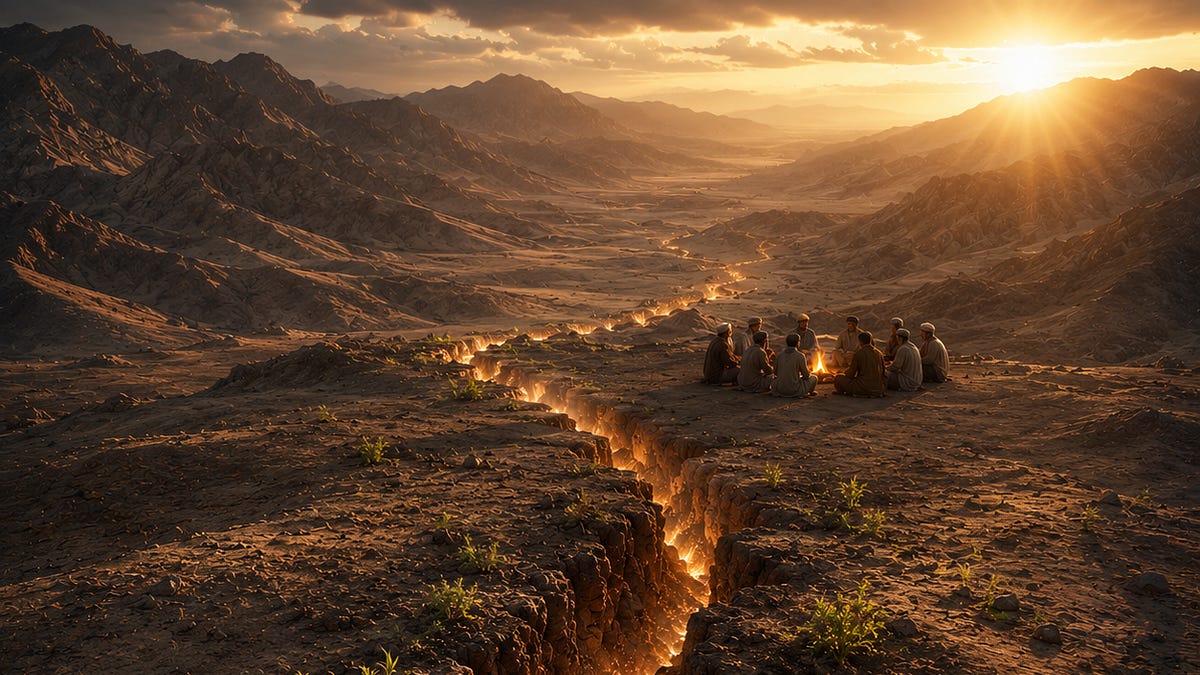
An ongoing Justicara series examining unresolved political fractures, human-rights concerns and the constitutional choices facing Pakistan.

5 parts

Part III

ExternalLatest

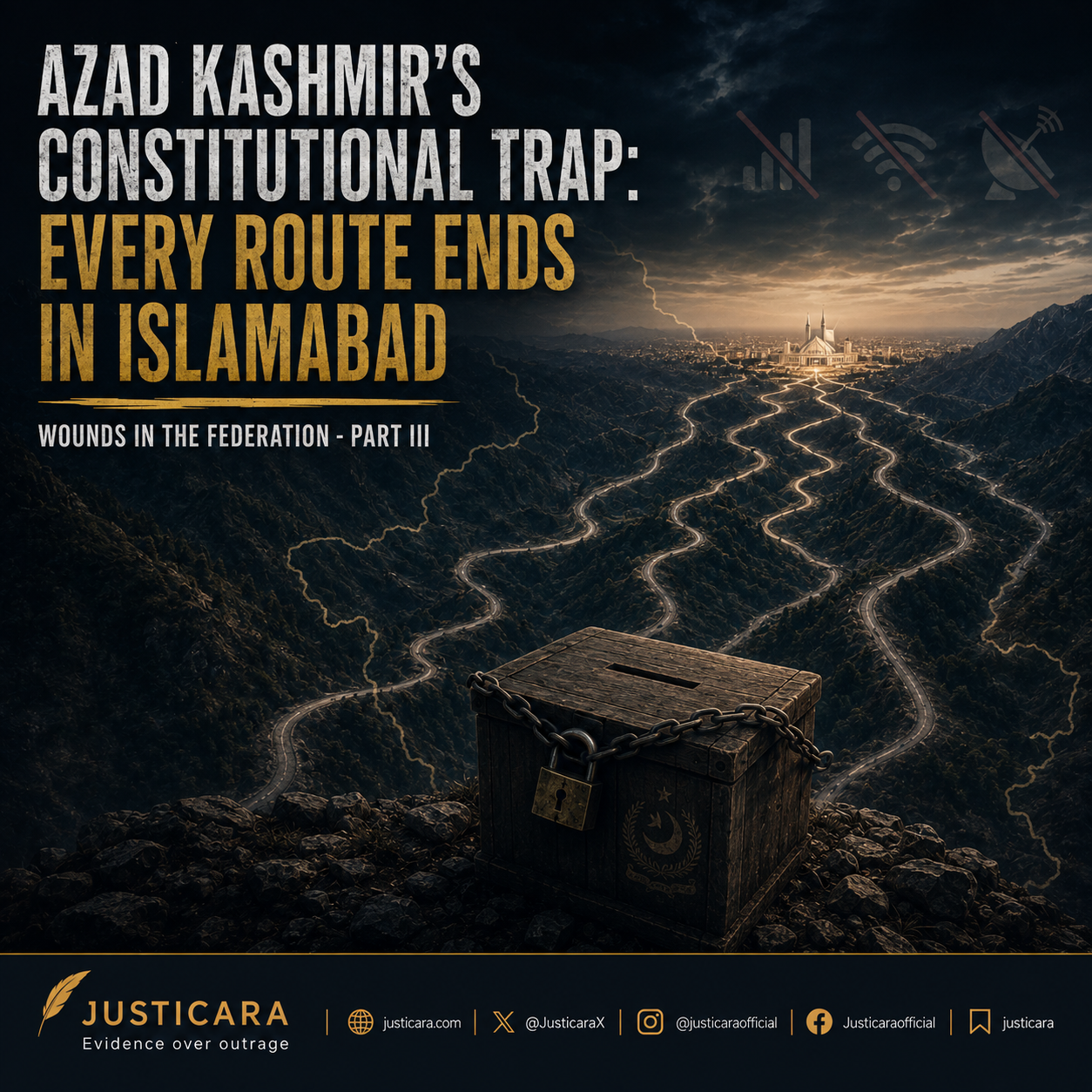
Azad Kashmir's Constitutional Trap: Every Route Ends in Islamabad

Azad Kashmir's Constitutional Trap: Every Route Ends in Islamabad Wounds in the Federation - Part III On 5 June, Azad Kashmir’s government did three things in a single day. It announced legislative elections. It declared the territory’s largest civic movement a proscribed organisation under anti-terrorism law. And it switched off the internet. Two days later the Supreme Court directed citizens to the constitutional remedy: an Article 33 amendment through the Legislative Assembly. A United Nations report had already recorded what that 2018 “devolution” actually did. It did not transfer power to the Assembly. It transferred power to the Prime Minister of Pakistan. The election is still being held in phases under recurring blackouts. Amnesty International has stated that the communications shutdown is severely impeding independent verification of reported deaths. Pakistan’s own Human Rights Commission has asked for access rather than claiming to already know the facts. The material demands that began this confrontation — the price of flour and the price of electricity — are not settled by any provincial-style entitlement. They arrive, when they arrive, as discretionary federal grants. Because Azad Jammu and Kashmir is not a province. Every constitutional route the court named leads to the same place.
Read on Justicara August 3, 2026

Part III - Preview

X

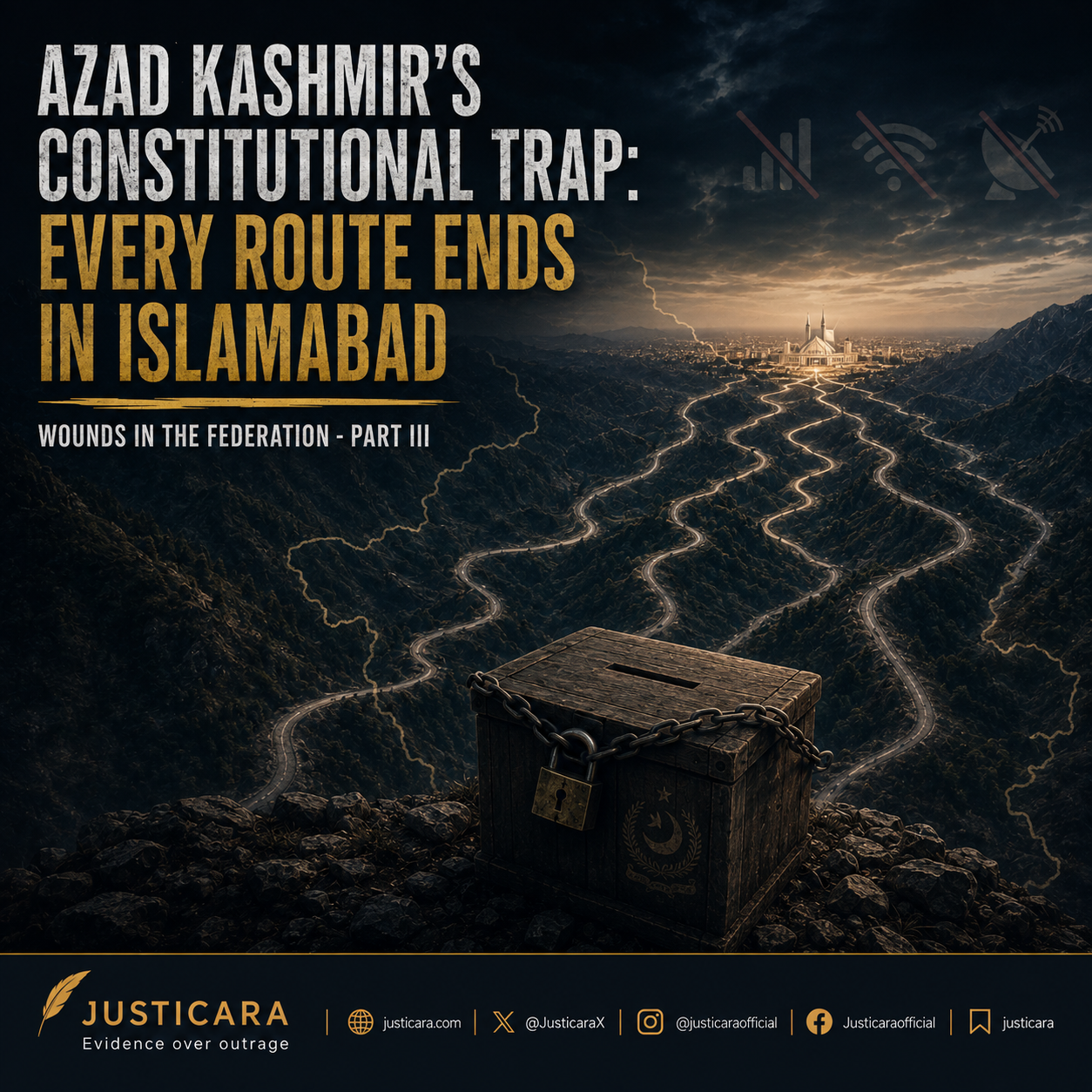
Azad Kashmir's Constitutional Trap: Every Route Ends in Islamabad

On 5 June, Azad Kashmir’s government did three things in a single day. It announced legislative elections. It declared the territory’s largest civic movement a proscribed organisation under anti-terrorism law. And it switched off the internet. Two days later the Supreme Court directed citizens to the constitutional remedy: an Article 33 amendment through the Legislative Assembly. A United Nations report had already recorded what that 2018 “devolution” actually did. It did not transfer power to the Assembly. It transferred power to the Prime Minister of Pakistan. The election is still being held in phases under recurring blackouts. Amnesty International has stated that the communications shutdown is severely impeding independent verification of reported deaths. Pakistan’s own Human Rights Commission has asked for access rather than claiming to already know the facts. The material demands that began this confrontation — the price of flour and the price of electricity — are not settled by any provincial-style entitlement. They arrive, when they arrive, as discretionary federal grants. Because Azad Jammu and Kashmir is not a province. Every constitutional route the court named leads to the same place. Full report on @JusticaraX https://x.com/JusticaraX/status/2084230314084479438?s=20

Read on Justicara August 2, 2026

Part II - Preview

X

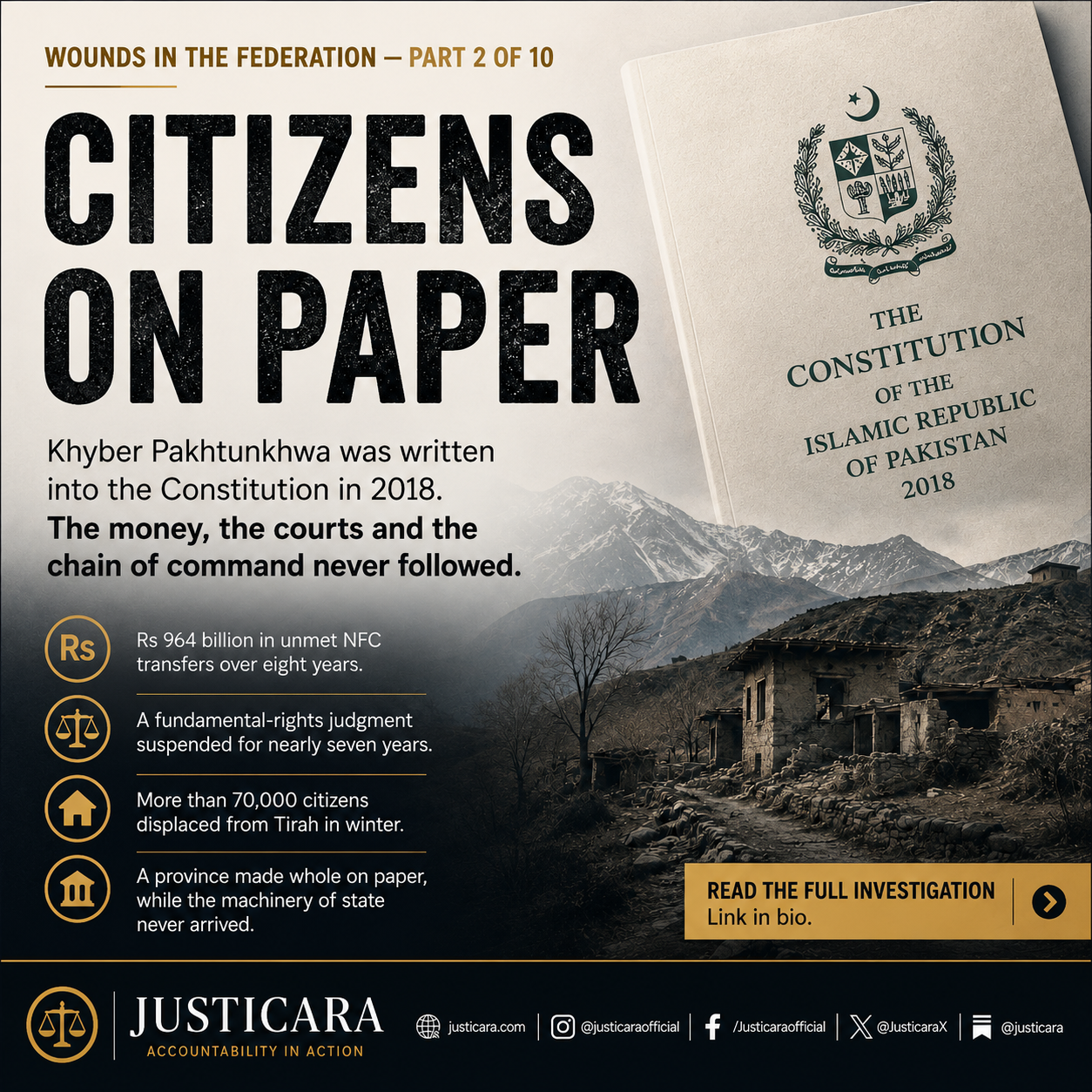
Citizens on Paper - Khyber Pakhtunkhwa

Coming Thursday, Wounds in the Federation — Part 2: Citizens on Paper examines what followed the 2018 merger of the former FATA districts with Khyber Pakhtunkhwa. The Constitution changed, the map changed, and the province inherited new responsibilities, but the promised resources, institutions, legal structures, and civilian chain of command did not fully change with them. Eight years later, KP has gone to court over funds it says are constitutionally guaranteed. This is more than a dispute over money; it is an investigation into what happens when a province is made whole on paper but not in practice, producing fiscal, legal, and operational failures with documented consequences. Part 1, on Balochistan, is already live, while Part 3 will examine Sindh. Follow @JusticaraX and subscribe at Justicara.com for first access and the complete source archive.

Read on Justicara July 22, 2026

Part I

Substack

Why Balochistan’s Wound Cannot Heal Without Politics

Pakistan cannot address a crisis rooted in alienation through force, condemnation and ritual statements alone. Wounds in the Federation — Part I. A symbolic depiction of alienation, fracture and the possibility of political healing in Balochistan. The latest violence in Quetta, Ziarat and Lasbela has once again drawn national attention to a crisis that, as Arifa Noor writes in Dawn, has rarely stopped bleeding for more than two decades. Yet for much of the country, awareness of Balochistan still arrives only when the violence intensifies, the death toll rises or a particularly shocking incident becomes impossible to ignore. That pattern itself is part of the problem. Mariabad, Quetta — a mountainside neighbourhood home to a large Hazara community. Photo source: original Instagram post. The human cost is devastating. Recent attacks have produced heartbreaking losses, while public anger ha

Read on Justicara July 16, 2026
Justicara
Evidence over outrage

Independent analysis of law, institutions, constitutional government and human rights — grounded in primary sources, not noise.

Support Justicara

Follow

© 2026 Justicara — Evidence over outrage. Founded 2026.Public record · Pg. 01